
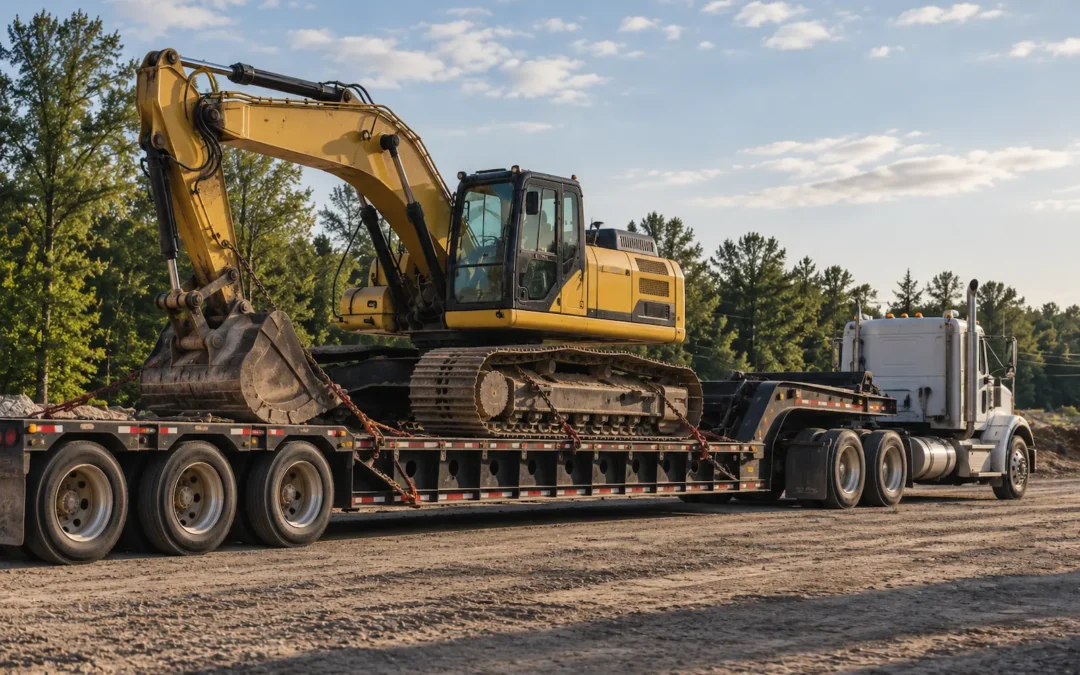
Moving a 40,000-pound excavator across the Richmond region has almost nothing in common with towing a sedan off the shoulder of I-95. Construction equipment hauling is a specialized job that depends on the right trailer, the right permits, and an operator who knows how to load a machine without damaging it or anyone nearby.
If you run a job site, manage a fleet, or need a single piece of machinery moved from point A to point B, it helps to understand what the work actually involves before you call for a quote. It helps to know what qualifies as construction equipment hauling, why it differs from standard towing, and how to choose a hauler in the Richmond area.
What Counts as Construction Equipment Hauling?
Hauling and towing are not the same service. Towing generally means connecting to a vehicle and pulling it, usually something that still has working wheels. Hauling means loading a machine onto a trailer and transporting it, whether or not it runs, rolls, or has wheels at all. That distinction matters because most construction machinery is too heavy, too tall, or too awkwardly shaped to be towed conventionally.
Equipment That Typically Needs a Specialized Haul
A dedicated hauler handles machinery that standard tow equipment cannot safely move, including:
- Excavators, backhoes, and skid steers
- Wheel loaders and dozers
- Cranes and forklifts
- Structural steel and oversized components
- Farm equipment such as tractors, combines, and implements
Excavator hauling in particular calls for a lowboy or flatbed rated for the weight, along with an operator who can secure tracks and booms correctly for transit.
Why Hauling Heavy Equipment Isn’t the Same as Towing a Vehicle
Standard towing usually deals with vehicles under roughly 14 tons riding on one or two axles. Heavy machinery blows past that threshold, and the added weight changes everything about how the load is handled.
Size is the next hurdle. Many machines exceed legal width or height limits once loaded, which pushes the job into oversized-load territory. That means permits, and often a specific route that avoids low bridges and weight-restricted roads. A hauler operating without proper DOT compliance can leave you liable for fines or delays, especially on long-distance hauls.
Then there is the loading itself. Tracked and articulated equipment can shift, tip, or scrape if it is winched onto the wrong trailer or tied down improperly. Damage-free loading depends on matched equipment and trained hands, not guesswork.
The Construction Equipment Hauling Process, Step by Step
A well-run haul follows a predictable sequence, and understanding it helps you know what to expect from a capable provider.
- Route and permit planning. The hauler assesses the equipment’s weight and dimensions, secures any oversized-load permits, and maps a route that clears bridges, overpasses, and weight limits.
- Loading and securing. The machine is driven or winched onto the trailer, then chained and strapped at rated anchor points. Booms, buckets, and attachments are locked down or removed as needed.
- Transport. The load moves along the planned route with attention to clearances and traffic. For a truck hauling an excavator or similar oversized piece, spacing and speed are adjusted for stability.
- Delivery and unloading. At the destination, the machine is offloaded onto stable ground and positioned where the crew needs it.
Each step protects both the equipment and everyone sharing the road. Skipping any of them is where problems tend to start.
What to Look for in a Richmond-Area Hauler
Not every towing company is equipped for this work. When you are hauling construction equipment or farm equipment, a few things separate a qualified provider from one that is out of its depth.
- Capacity and equipment. Confirm the trailers are rated for your heaviest machine and that the company owns the gear rather than subcontracting it.
- DOT compliance and permits. A serious hauler manages permits for oversized loads and stays fully DOT compliant so your job doesn’t stall at a weigh station.
- Licensing and insurance. Licensed, bonded, and insured coverage protects your equipment if something goes wrong in transit.
- Local route knowledge. Familiarity with I-64, I-95, I-295, and the surrounding corridors means fewer surprises and tighter scheduling.
- Around-the-clock availability. Job sites do not run on a nine-to-five schedule, and neither should your hauler.
Sports Towing & Recovery works with construction companies, developers, government agencies, and fleet operators across Central Virginia, and the team handles permits, loading, transport, and unloading as a single service.
Moving Your Equipment the Right Way
Whether you need a single excavator relocated or regular transport for a growing fleet, the details of the haul determine whether your machine arrives ready to work or in need of repair. Sports Towing & Recovery offers free quotes by phone and can walk you through the route and equipment your job requires. To talk through a move or get a quote, call 804-325-9971.